
Before you start. If you drink heavily or every day, talk to a doctor before you stop. Stopping suddenly can bring on withdrawal that needs medical care.
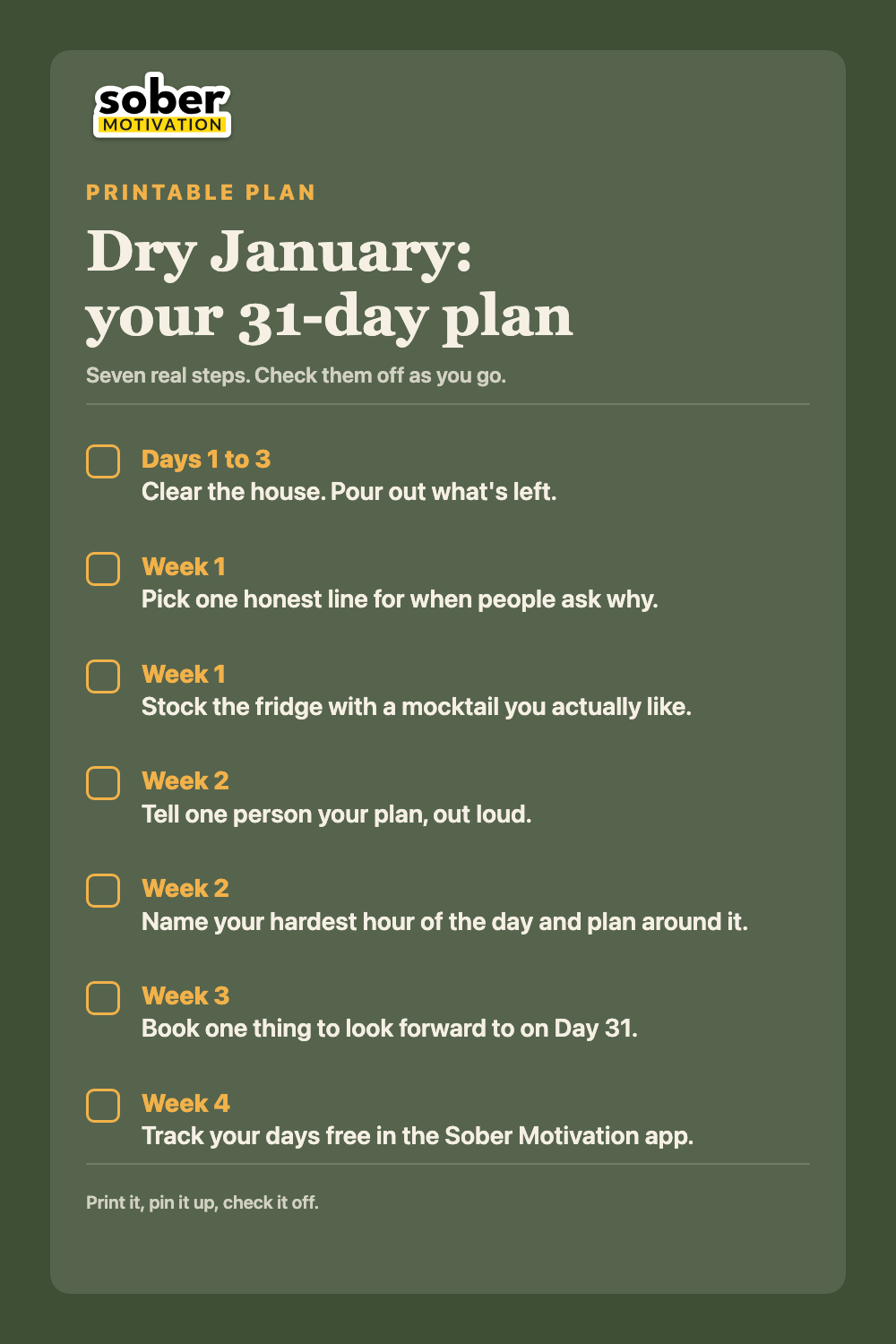
Your seven steps
What to expect, week by week
These are findings from the Body Restoration tracker, each with the study behind it. The day markers are landmarks, and your own pace can run ahead or behind.
Week one, days 1 to 7
The first days ask the most of you, and the body is already changing.
-
2 Days
The strongest cravings begin to ease
Cravings are most intense right at the start, then step down over the first days. The slope of that decline is itself a predictor of long-term success.
Source: PMC5832597 (opens in a new tab)
-
3 Days
Dreams come back, sometimes vividly
As alcohol stops suppressing REM sleep, it rebounds, often as intense, vivid dreams. It is a sign the system is switching back on, and it settles.
Source: PMC6879503 (opens in a new tab)
-
4 Days
The peak passes
A racing heart, higher blood pressure, and restlessness peak around now as your nervous system rebalances, then begin to fall. Heavy daily drinkers should clear this window with clinical support.
-
7 Days
Deep sleep starts to normalize
Even while REM stays elevated, your deep (non-REM) sleep returns toward normal within about four days, the first restorative-sleep foothold.
Source: PMC4427543 (opens in a new tab)
Week two, days 8 to 14
Irritability eases and the numbers under the surface start to move.
-
9 Days
Inflammation alarms quiet down
Key inflammation signals like IL-6 drop noticeably within about a week as your body stops fighting the daily damage from alcohol.
Source: PMC8292967 (opens in a new tab)
-
10 Days
Liver injury markers start falling
Within your first week the injury enzymes your liver spills into your blood (AST and ALT) already begin dropping, an early sign it is getting a break.
Source: PMC7197820 (opens in a new tab)
-
12 Days
Your blood sugar settles
One week off alcohol lowers fasting blood sugar about 7% and improves how your liver handles insulin.
Source: PMC5220444 (opens in a new tab)
-
2 Weeks
The raw irritability lifts
The anger and edginess of the first days tend to settle fastest, usually easing within the first week or two.
Source: PMC12519049 (opens in a new tab)
Week three, days 15 to 21
Thinking sharpens and the liver keeps clearing.
-
2 Weeks
Fatty liver can clear
Fat that recent heavy drinking packed into your liver can fully clear in as little as ten days, with no lasting scar.
Source: PMC12701993 (opens in a new tab)
-
2 Weeks
Your brain tissue starts bouncing back
Just two weeks in, scans can already pick up brain tissue beginning to regrow, the earliest reliably imaged structural rebound.
Source: PMC5984169 (opens in a new tab)
-
3 Weeks
Your body clock resets
Around two weeks, the natural melatonin rhythm that makes you sleepy at night begins returning to its normal pattern.
-
3 Weeks
Your mental scratchpad sharpens
Working memory, holding a phone number or a step in a recipe in mind, is one of the first skills back, often within about two and a half weeks.
Source: PMC5540274 (opens in a new tab)
Week four and the finish
The last stretch is where a dry month pays off in measurable ways.
-
3 Weeks
Leaky gut seals back up
Over about three weeks the intestinal barrier that heavy drinking loosens can return completely to normal, healthy tightness.
-
4 Weeks
Anxiety and low mood lift for most
By around three weeks, most people see anxiety and depression drop clearly. Some need more time and support, which is completely normal.
Source: PMC12098805 (opens in a new tab)
-
1 Month
Facial redness and puffiness settle
Alcohol dilates facial blood vessels and drives puffiness, so being alcohol-free gives the flushing and under-eye swelling room to calm down.
Source: PMC5438297 (opens in a new tab)
-
1 Month
The biggest month for your brain
The first 30 days do the heavy lifting: roughly half of your brain's total tissue recovery happens in the first month, led by the frontal lobe.
Source: PMC4345147 (opens in a new tab)
-
1 Month
One dry month resets your metabolism
A single alcohol-free month drops insulin resistance about 26%, lowers blood pressure, trims weight, and cuts cancer-linked growth factors sharply.
-
1 Month
Your blood pressure drops and holds
One month proven abstinence lowers 24-hour blood pressure by roughly 7 points systolic and 6 diastolic, a durable win for your heart and stroke risk.
Lines for when people ask
- "I'm taking January off. Feeling good so far."
- "I've got an early morning, so just water for me."
- "I'm good with this, thanks. What are you drinking?"
- "I'm doing Dry January. Want to try it with me?"
Say one calmly, then ask a question about them. The subject changes within a sentence or two.
Your hardest hour
Look back over a normal week and find the hour where a drink usually showed up. Write the time down. Then choose what goes there instead: a walk, a call, a shower, a snack, the game you keep meaning to finish. Change the room you are in if you can. The habit is tied to a place and a time, and both are easy to move.
When Day 31 arrives
Look at how sleep, mornings, money and mood compare with where you started. Then choose your next step: another month, a longer stretch, or a new baseline you can live with. Whatever you pick, decide it on purpose, on a day you feel steady.
Questions people ask
When does Dry January start and end?
Dry January runs from January 1 to January 31. You can start on any date and count 31 days from there.
What if I slip during Dry January?
Note what happened and what was going on around it, then start your count again the next morning. The plan works from any day you begin.
What changes in the body during a dry month?
A single alcohol-free month drops insulin resistance about 26%, lowers blood pressure, trims weight, and cuts cancer-linked growth factors sharply. (Source: BMJ Open PMID 29730627 (opens in a new tab)) One month proven abstinence lowers 24-hour blood pressure by roughly 7 points systolic and 6 diastolic, a durable win for your heart and stroke risk. (Source: PMID 10024322 (opens in a new tab))
Is it safe to stop drinking for a month?
If you drink heavily or every day, talk to a doctor before you stop. Stopping suddenly can bring on withdrawal that needs medical care.
Track your 31 days
Count your days free in the Sober Motivation app and keep the number where you can see it every day of the month.
Get the appOpens the App Store or Google Play on your phone, and sobermotivation.net on a computer.